You do not have to be good.
You do not have to walk on your knees
for a hundred miles through the desert repenting.
You only have to let the soft animal of your body
love what it loves.


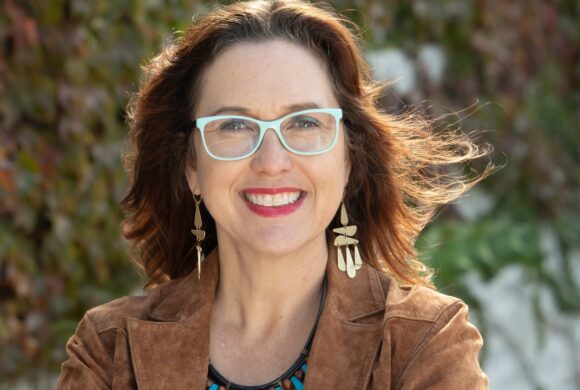
Maddie Tonjes, LCSW (she/her): I am a Licensed Clinical Social Worker who is passionate about helping children, adolescents, and adults become their most authentic selves and find freedom in their lives. I see my most important role as helping others connect with themselves in ways they haven’t before and find the words for what has been difficult to express.
My primary focus areas are trauma, navigating medical challenges and chronic illness, relationship concerns, depression, anxiety, and neurodiversity. Many of my clients are looking for a deeper connection with themselves, and a way of living that feels more in tune with their needs and more intentional about their life path.
I especially enjoy working with children and adolescents, helping them develop the tools of self-expression, personal responsibility, and self-empowerment.
My style draws from trauma-informed practice, psychodynamic theories, somatic approaches, and expressive therapy. I have also completed over 30 hours of training in Child-Centered Play Therapy, which you can read more about below.
In our work together, I am interested in co-creating a therapeutic space where you feel both supported and empowered to be in control of your therapy journey. I see myself as an active participant in the process, offering honesty and compassionate challenges. I strive to practice what I preach when it comes to showing up authentically and I will support you in safely exploring and naming the things that feel difficult to talk about at a pace that feels right for you. I would be honored to support you in the process.
I earned my Master of Arts in Social Work from the University of Chicago Crown Family School of Social Work, Policy, and Practice. During my studies, I worked with the Ann & Robert H. Lurie Children’s Hospital’s Department of Psychiatry as a member of the Trauma Treatment Services team. I have also worked with children, adolescents and their families in both school and research settings.
You do not have to be good.
You do not have to walk on your knees
for a hundred miles through the desert repenting.
You only have to let the soft animal of your body
love what it loves.
Education and Credentials
What specific modalities do you practice and are you certified?
I have been trained in a variety of modalities including Trauma-Focused Cognitive Behavioral Therapy, Child-Centered Play Therapy, Acceptance and Commitment Therapy, and Psychodynamic therapy. My practice also draws from a relational, client-centered focus with a lot of interest in creativity, narrative theory, play therapy, and body-based work. I have also completed the Postpartum Support International Perinatal Mood and Anxiety Certificate Course, but I am not yet certified as a PMH-C.
What is Child-Centered Play Therapy (CCPT)? How will it help my child?
Child-Centered Play Therapy is a form of therapy for children aged 3-10 years old who are experiencing emotional, behavioral, and/relational challenges. By utilizing play, I can meet kids where they are developmentally and allow children to be in control of their own healing and potential. CCPT is also about showing up as a therapist in a way that allows kids to experience total acceptance and empathy, while the structure of the playroom and the use of expressive tools allow kids to process inner experiences and feelings through play and symbols. While goals and outcomes vary from child-to-child, most children who participate in CCPT can expect to build self-esteem, gain a sense of mastery, increase choice-making skills, and improve overall wellbeing.
What is expressive therapy?
Expressive therapy uses creative outlets, such as music, dance, drama, art, and writing, to process thoughts and emotions. In my work, I use expressive therapy tools in tandem with more traditional “talk therapy” tools. I also see expressive therapy as being very aligned with body-oriented or somatic therapy, in the way that it helps us go deeper into our understanding of ourselves in ways that language alone can’t do.
What are you excited about? What is your passion? What do you want to learn more about?
I am so passionate about being a part of other people’s journeys! What a cool thing to get to be a human exploring our shared “humanness” with other humans. I also especially love when this work allows us to tap into parts of ourselves that have felt unheard or forgotten. We get to be more of ourselves. I want to learn more about how I can continue to help find those spaces.
What do you like about being a therapist?
I like getting to connect with people! It’s so simple and also so complex! I get to explore new things every day.
What values or beliefs drive your work?
I have been heavily inspired by artist Corita Kent and the Immaculate Heart College Art Department rules (you can see the original piece here). What follows is my own adaptation for therapy “rules.” While I don’t think it’s possible to sum up everything about my style, I hope this offers a glimpse into how I think about our work together
Rule 1. “Find a place you trust and try trusting it for a while.” Corita Kent
Rule 2. General duties of a client: The only rule is being you. If you spend enough time with yourself, you will get somewhere only you can go.
Rule 3. General duties of a therapist: Practice what you preach. Be willing to try something new. Never assume you already know anything.
Rule 4. We are not seeking certainty. We are seeking possibility.
Rule 5. You are not trying to live anybody else’s life. No one else can live your life.
Rule 6. There are no failures. Everything is an experiment, and all outcomes are just information.
Rule 7. Everyone is capable of growth and change. We all have an inherent ability to know what we need to do to be the people we need to be.
Rule 8. We won’t solve everything. In fact, we may find there was never anything to solve in the first place.
Rule 9. Practice curiosity often. Towards others, but especially towards yourself.
Rule 10. Show up for yourself. Show up again. Repeat.
Helpful hints: Say it even if it sounds wrong. Let yourself be more wrong than you think. Let yourself be more right than you think. Be the person you are afraid to be.
There should be new rules next week.
What do you like to do when you are not working? What do you do for fun?
I love to be creative in any way I can be. I was originally trained as an actor and dancer before becoming a social worker and being in creative spaces is something I have been doing for most of my life. I have a lot of fun exploring the world as well.
What’s your “go to” creative or restorative outlet?
Dance, dance, dance . I love to move and I love music. If I can’t dance, I like to go for walks or work on a knitting or crochet project. I have so many sweaters… but you can never have too many.